Quantum PocketQubeSat

Flight Validation of Secure Quantum Communications for Defence

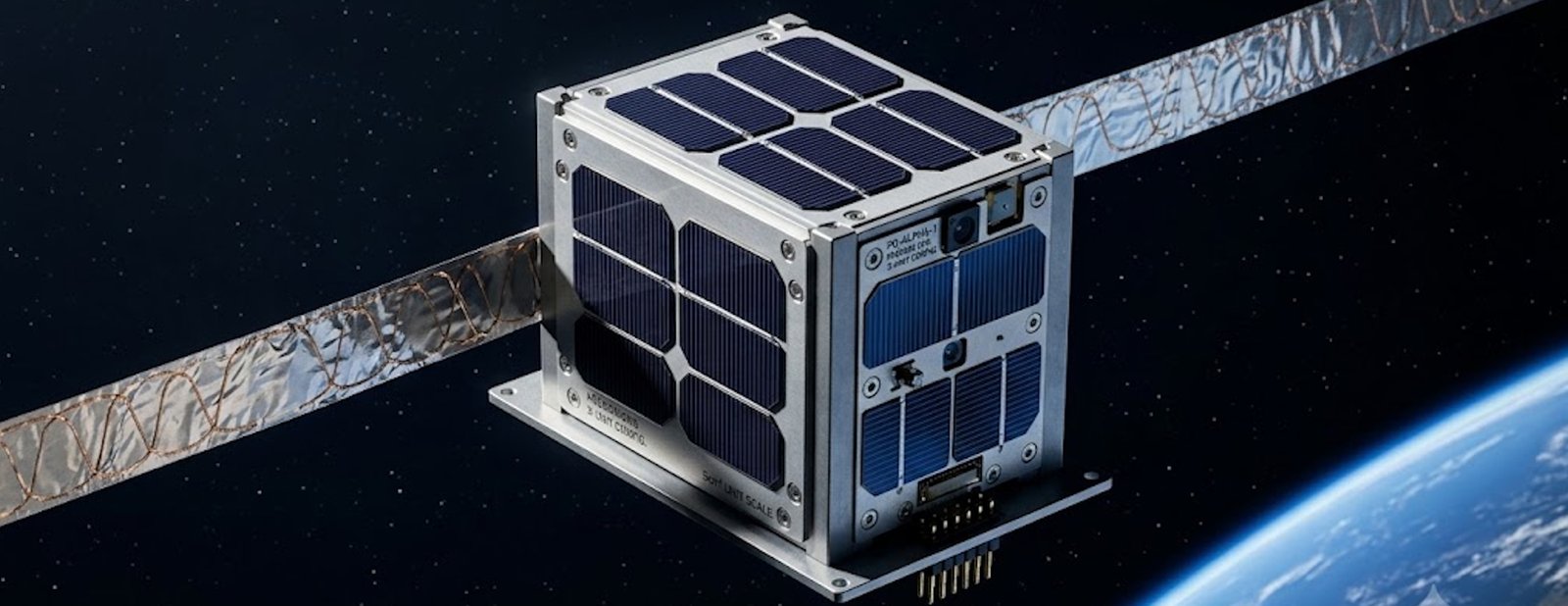
DragonSat advances defence-grade quantum communications by validating critical quantum optics subsystems in orbit. Built on a 1.5P PocketQube platform, the mission is designed to characterise quantum state stability, photon integrity, and system resilience under real orbital conditions. These flight results directly support the development of trusted-node quantum satellite architectures and secure space communications networks for defence and government users.

DragonSat serves as an operational risk-reduction mission, providing real-world performance data on quantum payload behaviour in microgravity, thermal cycling, and radiation environments. This data underpins future deployment of secure, interception-resistant communications links for military and intelligence operations.

Quantum PocketQubeSat

DragonSat SPACECRAFT SPECIFICATIONS

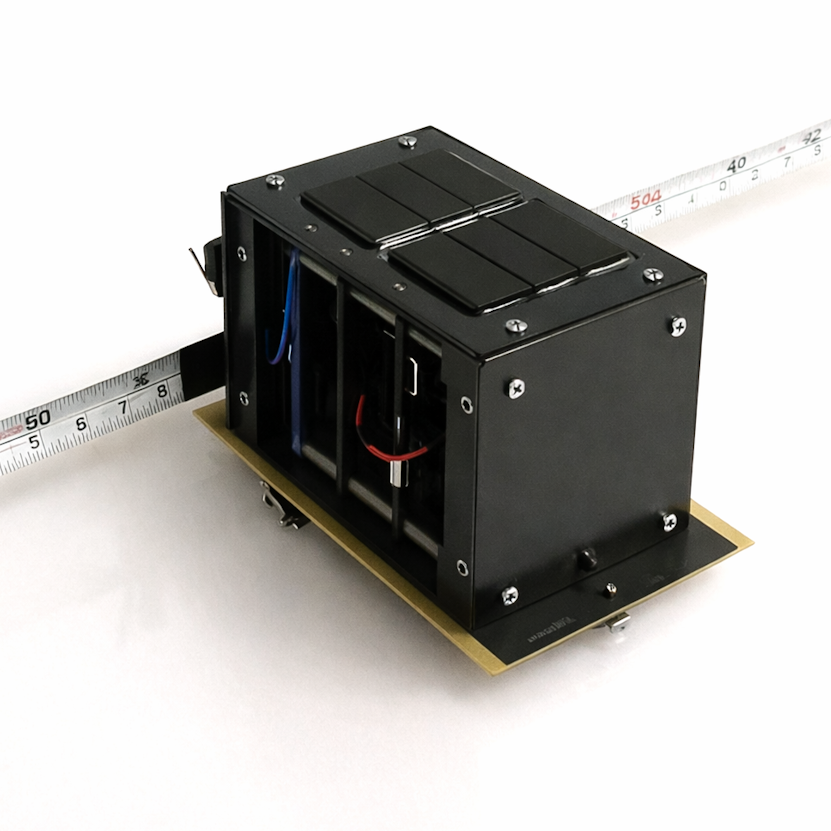
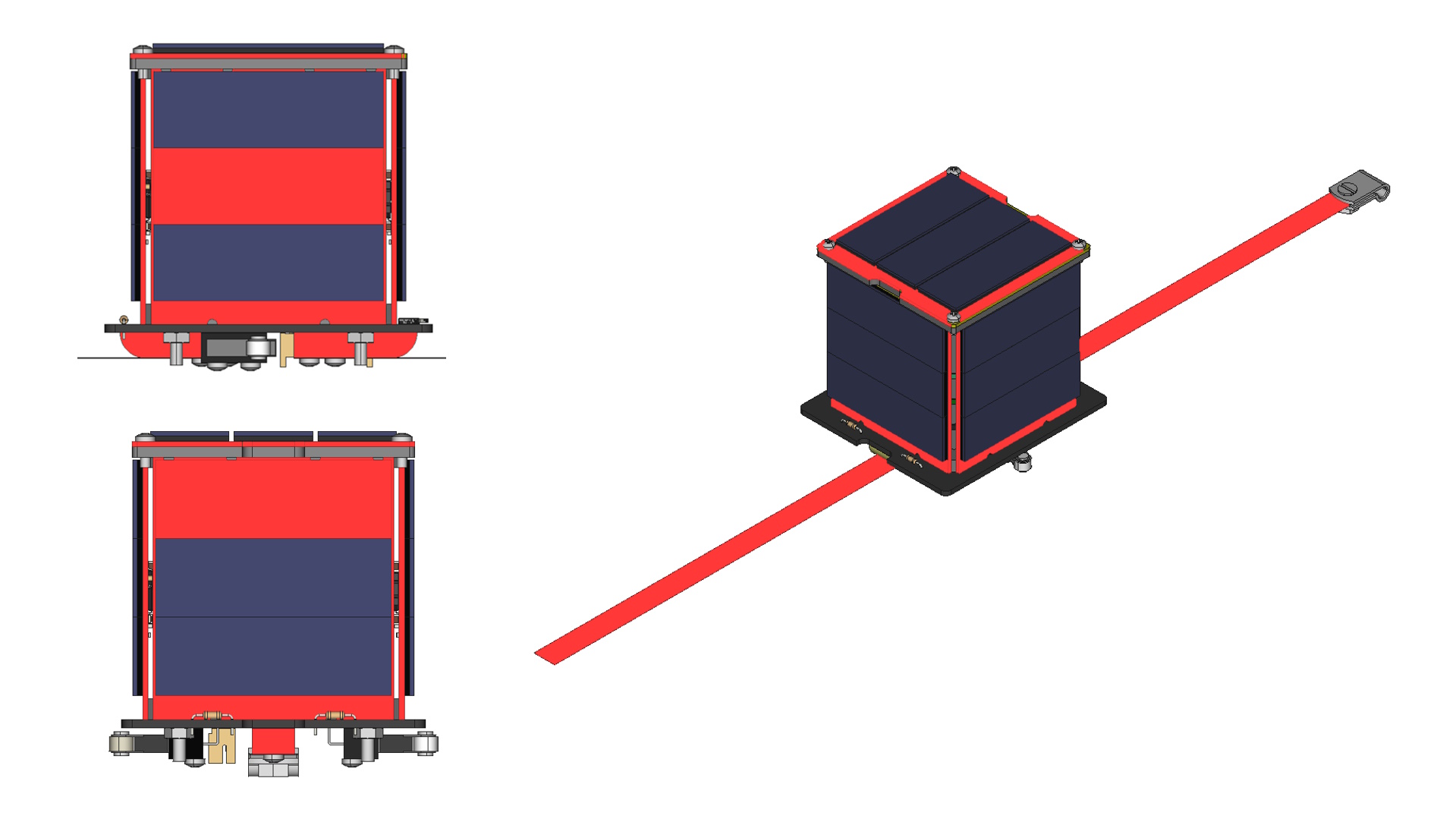
PocketQube: 1.5P Chassis
Payload: Quantum Light Module (Defence-Oriented Quantum Optics)
Average Payload Power: ~1 W
Attitude Control: Passive Bar Magnet
Mass: ≤ 250 g
Antenna: Deployable 437 MHz UHF dipole antenna
Payload Data Downlink:1.2kb/s (UHF)

Quantum PocketQubeSat

Mission-Grade Power & Systems Architecture

At the core of DragonSat is a highly efficient, mission-grade power and avionics architecture engineered to sustain continuous quantum payload operations in orbit. The Quantum Light Module operates at an average power draw of approximately 1 W, enabled by high-efficiency components and intelligent power management. This ensures sustained operational availability while maintaining strict power margins required for defence-grade missions.

The DragonSat payload is a miniaturised, defence-oriented quantum communications system designed to validate secure space-based quantum networking concepts. It incorporates a compact entangled-photon source using spontaneous parametric down-conversion (SPDC), enabling evaluation of quantum key distribution and other quantum-secure communication techniques in orbit.

Quantum PocketQubeSat

Defence-Grade Quantum Communications Payload

The payload prepares, transmits, and measures quantum states with high precision while operating within the constraints of a PocketQube platform. Onboard processing supports secure data handling and real-time performance assessment, while a resilient power subsystem ensures continuous operation throughout the mission. The results directly inform the design of sovereign, trusted-node quantum satellite payloads for secure national communications infrastructure.

Quantum PocketQubeSat

Power and Computing Systems for Defence‑Grade DragonSat Operations

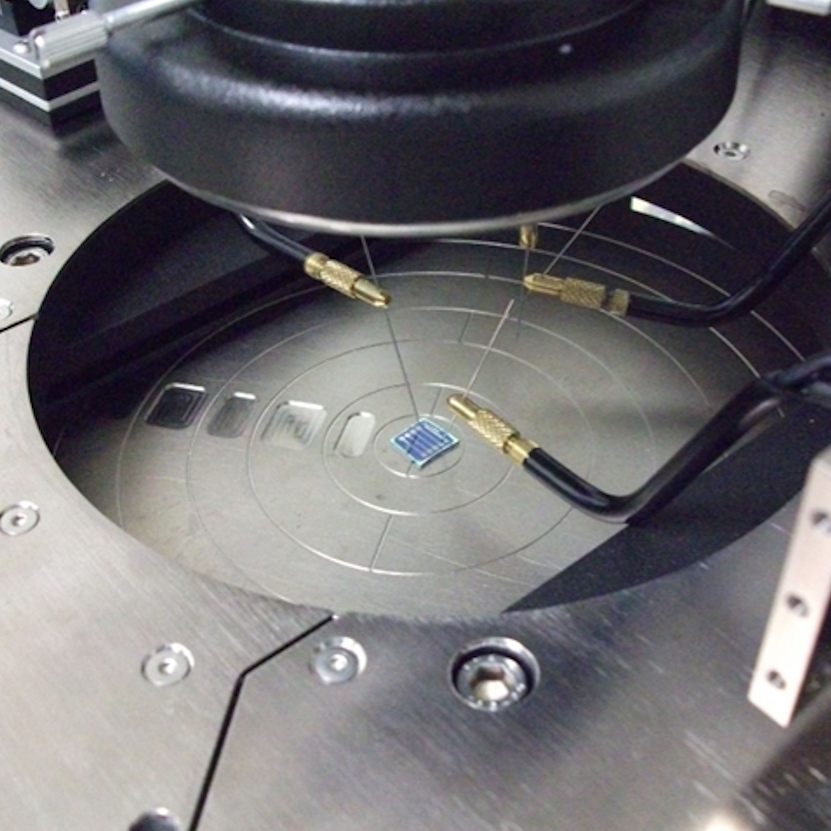
DragonSat is equipped with a mission‑critical power subsystem engineered for secure and sustained operations in the space domain. Its triple‑junction GaAs solar panels achieve ~30% efficiency, generating approximately 1 W of power depending on sunlight exposure, ensuring consistent energy supply for defence payloads. A robust Li‑Po/Li‑Ion battery with a 1000 mAh capacity (~3.7 Wh) provides reliable energy storage, while the Power Distribution Unit (PDU) delivers regulated 3.3 V and 5 V outputs to support sensitive communications and control systems. Integrated Maximum Power Point Tracking (MPPT) technology optimises energy harvesting for long‑duration missions, maintaining operational readiness and resilience in both peacetime and contested orbital environments.

Quantum PocketQubeSat

Onboard Computing and Mission Assurance

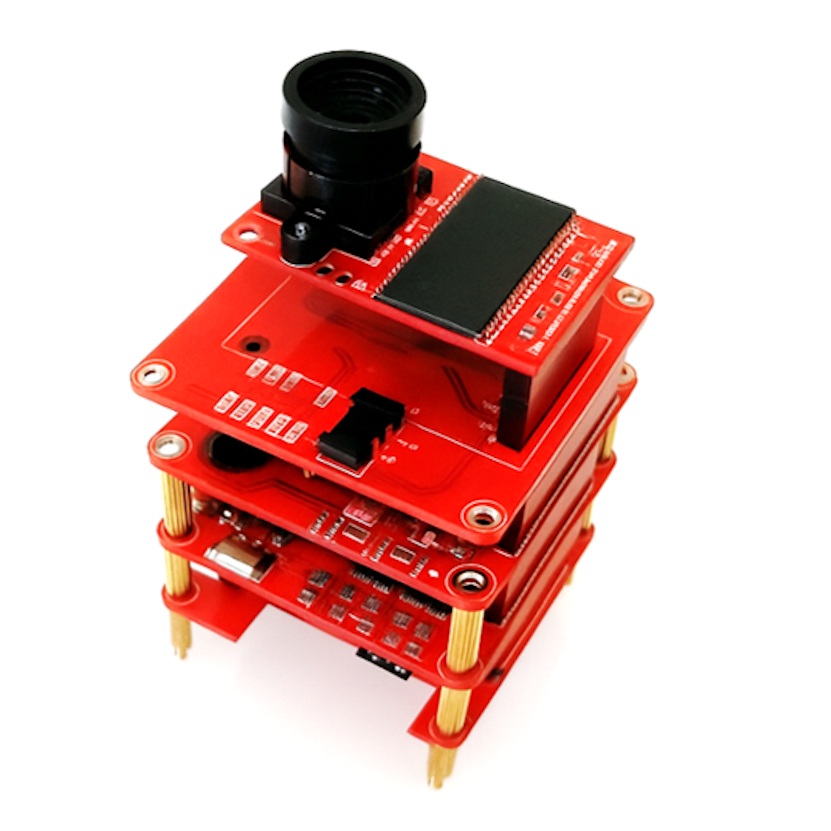
For onboard computing and data handling, DragonSat is equipped with an ARM Cortex‑M4 or RISC‑V‑based microcontroller, operating at ~100–200 MHz and paired with 512 KB RAM and 8 MB Flash storage, with optional SD card expansion. The system runs on a Real‑Time OS (RTOS) or custom firmware, supporting I²C, SPI, UART, and GPIO interfaces for secure communication and precision control. To ensure mission assurance, the satellite features a watchdog timer and reset mechanisms for redundancy and fault tolerance, maintaining uninterrupted operation in the harsh and contested conditions of space.

Quantum PocketQubeSatat

Secure and Resilient Communications for Defence Operations

DragonSat’s communication subsystem delivers assured, encrypted data transmission and reception via a robust UHF (437 MHz) link, engineered for mission‑critical performance in the space domain. Its deployable dipole antenna supports a 1.2 kbps data rate using Gaussian Frequency Shift Keying (GFSK) modulation, while the transceiver, configurable up to 100 mW balances secure link reliability with optimised power consumption. To safeguard signal integrity, DragonSat employs Reed‑Solomon and convolutional encoding for advanced error correction, ensuring data resilience in contested and degraded space environments. Fully compatible with secure ground‑station networks, DragonSat enables global tracking, command, and mission support, reinforcing its role as a sovereign communications asset for defence and national security operations.

Quantum PocketQubeSat

A PocketQube Engineered for Defence and the Future

DragonSat is a pioneering PocketQube satellite designed to deliver sovereign capability in the rapidly evolving space domain. This flagship mission unites defence innovators, research institutions, and strategic industry partners to push the boundaries of secure, space‑based quantum communications. Built for cutting‑edge experiments in quantum entanglement and coherence within the microgravity environment of low Earth orbit, DragonSat will generate critical insights to advance encrypted quantum networks. These outcomes will lay the foundation for next‑generation, space‑based communications technologies that enhance national security, operational resilience, and strategic advantage in contested environments.

Quantum PocketQubeSat

Attitude Determination and Control System for Defence Operations

The spacecraft’s Attitude Determination and Control System (ADCS) is a mission‑critical element of DragonSat’s design, ensuring stable, reliable performance for defence and national security payloads. DragonSat employs a passive bar magnet for orientation control, using the Earth’s magnetic field to maintain passive stabilisation in orbit. This low‑power approach delivers exceptional energy efficiency, removing the need for complex, energy‑intensive active control systems and reducing potential points of failure. By maintaining precise payload alignment throughout the mission, the ADCS safeguards the integrity of sensitive quantum experiments, ensuring accurate data capture and minimising interference, even in contested or degraded space environments.

Quantum PocketQubeSat

Compact and Lightweight: Strategic Payload and Mass Efficiency

DragonSat has been engineered for maximum efficiency in a defence‑grade PocketQube form factor, with a total mass of just 250 g. This ultra‑low mass enables rapid deployment on small‑scale launch vehicles or integration into larger satellite constellations, supporting dispersed, resilient architectures. Its compact design makes DragonSat an ideal platform for low‑cost, high‑impact missions where minimal size and weight are critical to operational flexibility and rapid response.

This mass‑efficient architecture not only reduces launch costs but also increases the feasibility of deploying multiple spacecraft for constellation‑based operations within tight budget and time constraints. Despite its small size, DragonSat integrates all systems required to execute complex quantum communications research, demonstrating that compact platforms can deliver sovereign, mission‑critical capability in the contested space domain.

Quantum PocketQubeSat

Deployable Antenna System for Secure, Mission‑Critical Data Transmission

DragonSat’s payload data downlink operates at 1.2 kb/s via UHF frequencies, delivering a continuous, assured stream of mission‑critical data from orbit to authorised ground control. Optimised for the secure transfer of quantum experiment results, including measurements of entanglement and coherence, this link ensures that essential intelligence can be relayed in real‑time or at scheduled intervals to support defence and national security objectives. The deployable dipole antenna and robust transceiver architecture provide reliable performance in contested and degraded space environments, while advanced error‑correction protocols safeguard data integrity. By maintaining a low data rate, the system minimises power consumption, enhancing overall energy efficiency and ensuring sustained operational readiness throughout the mission.

Infinity Space Technology